Dry Needling Therapy in Chapin, SC
Chronic pain and stiffness often trace back to trigger points, tight knots in your muscle that can refer pain to a completely different part of your body. Family Practice of Chiropractic offers dry needling in Chapin, SC, a technique Dr. Henning is specifically certified in, to release those knots at the source. If stretching, rest, or a regular massage has not given you lasting relief, dry needling reaches muscle tissue those approaches cannot.
Provided by
Dr. Henning, a certified provider of Dry Needling Therapy.
Technique
Thin needle inserted directly into a trigger point.
Sensation
Minimal pain, possible tingling.
Not the same as
Acupuncture, a different Eastern medicine technique.
What Is Dry Needling
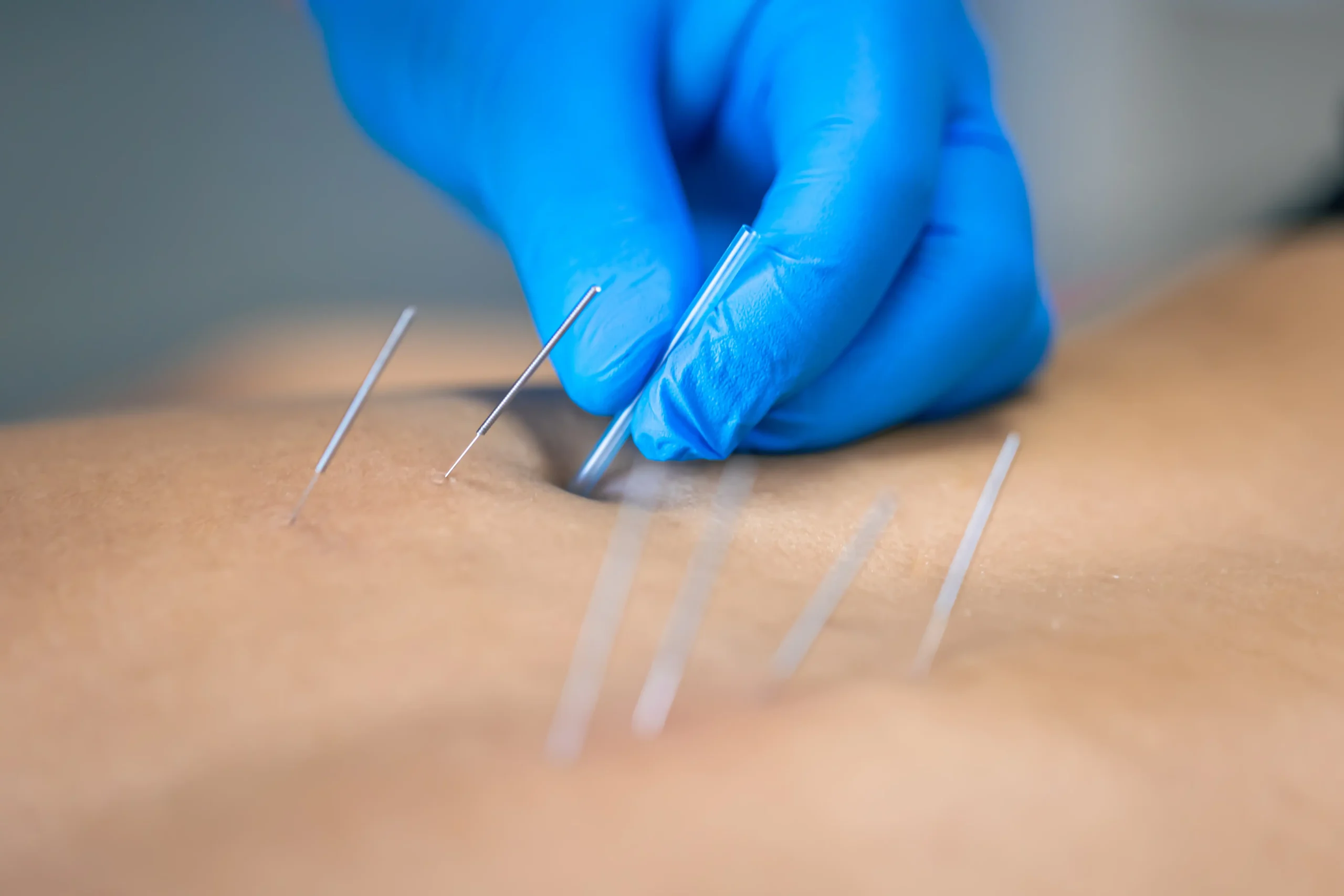
Dry needling is a treatment for musculoskeletal pain and movement problems that uses thin, sterile needles to target myofascial trigger points, which are tender, tight areas within muscle tissue that can cause local or referred pain. The needle is inserted into or near the affected trigger point to stimulate the muscle and help reduce tightness, relieve pain, and improve range of motion. No medication is injected, which is why the technique is called “dry” needling.
Although dry needling and acupuncture both use thin needles, they are distinct treatment approaches. Dry needling is generally based on musculoskeletal assessment and targets muscles, trigger points, and movement-related symptoms, while acupuncture originates from traditional Chinese medicine and is used within a different clinical framework.
What to Expect From a Dry Needling Session
The needles used for dry needling are very thin and do not go in deep, similar to what is used in acupuncture. Most patients feel little to no pain, though a brief tingling sensation at the site is common. Our team follows proper sterile protocols for every session, using fresh, single-use needles and standard protective equipment.
Dry needling is considered safe for most people, but Dr. Henning may recommend a different approach if you are pregnant, recovering from recent surgery, or taking blood thinners. Your evaluation includes a review of your health history to confirm it is a safe fit before your first session.
Who Dry Needling Helps
Because referred pain plays a role in so many chronic pain patterns, dry needling has a wide range of real uses. Dr. Henning may recommend it for:
Headaches and Migraines fed by tight muscle knots in the neck and shoulders
Tendonitis, TMJ disorder, or night cramps caused by chronically tight muscle tissue
Carpal tunnel syndrome or other repetitive motion and overuse injuries
What Results Can You Expect?
Dry needling targets the muscle knot causing your pain directly, not just the area where you feel it. Patients commonly notice reduced muscle tension, less referred pain, and improved range of motion once the trigger point releases. Some people feel relief after a single session, though a trigger point that has been active for a long time often needs a few sessions before the improvement holds.
Does Dry Needling Hurt?
Dry needling is generally well tolerated, with most patients feeling little to no discomfort when the thin needle is inserted. When the needle reaches a trigger point, you may feel a brief muscle twitch or tingling sensation as the muscle responds. Mild soreness can occur afterward and may feel similar to the soreness following a deep massage. Dr. Henning adjusts the treatment based on your comfort level throughout the session.
Serving Chapin, SC and the Surrounding Area
Family Practice of Chiropractic offers dry needling for patients across Chapin and the nearby Lake Murray area. Call (803) 932-9399 to ask whether dry needling fits what you are dealing with.
What Our Patients Say
Patients come to Family Practice of Chiropractic for one specific pain and often stay for ongoing wellness care once they see what a plan built around a real evaluation actually feels like. Ask us how we can help with what you are dealing with.
Frequently Asked
Questions
No, even though both use thin needles. Acupuncture is based on Traditional Chinese Medicine and treats a broad range of conditions, while dry needling is a Western technique focused specifically on releasing trigger points and other soft tissue problems.
Both target trigger points, but the methods are different. Trigger point therapy uses focused manual pressure to release the knot, while dry needling inserts a thin needle directly into it. Dr. Henning may recommend one, the other, or both depending on what your evaluation finds works best for you.
Most patients feel little to no pain, since the needles used are extremely thin. You may notice a brief muscle twitch or tingling sensation as the trigger point releases, and any soreness afterward is usually mild and short-lived.
For most people, yes, but it is not right for every situation. Dr. Henning may recommend a different approach if you are pregnant, recently had surgery, or take blood thinners, since needle-based treatment carries added considerations in those cases. Your health history gets reviewed before your first session.
That twitch is actually a good sign. It means the needle has reached the trigger point directly, and the muscle is releasing the tight knot that has been causing your pain. Not every insertion produces a twitch, and its absence does not mean the treatment is not working.
It depends on how long the trigger point has been active and how your body responds. Some patients notice relief after their first session, while a longstanding knot often takes several sessions to fully release. Dr. Henning sets expectations based on your specific case.
Coverage depends on your specific plan. Family Practice of Chiropractic works with most major insurance plans, and our front desk verifies your benefits before treatment starts so you know your cost ahead of time.
Get to the Knot Behind Your Pain
A trigger point that never fully releases has a way of quietly limiting how you move, long after you have stopped noticing it is there. Dr. Henning is a certified provider of dry needling and can evaluate whether it is the right approach for what you are dealing with. Call the Chapin office or request an appointment online to find out.